
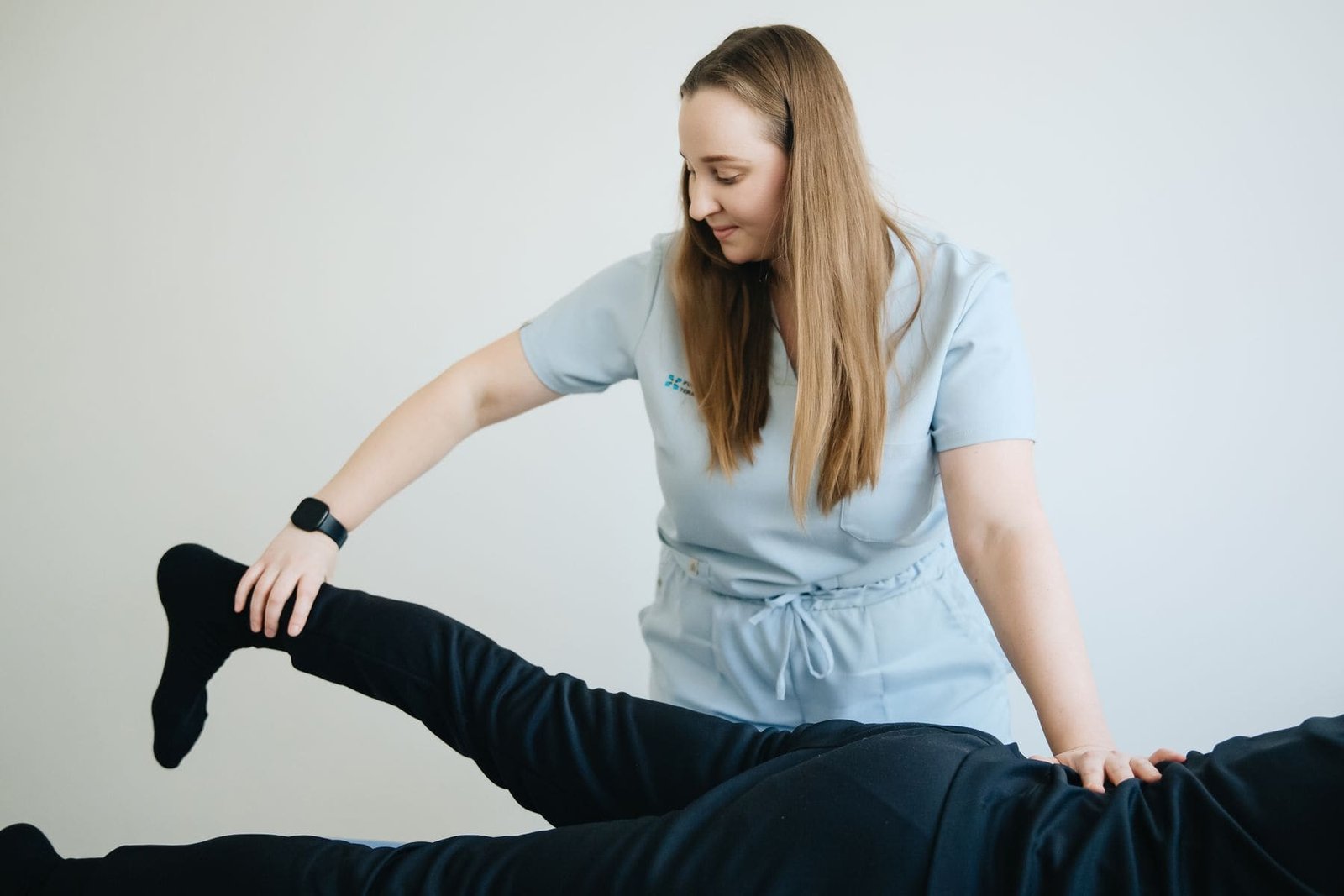
After an injury, it’s natural to rest and wait for things to feel better. Some rest is important — but too much can lead to stiffness, weakness and a longer road back. Physical therapy guides the healing process so you recover faster and more completely.
Healing needs the right kind of stress
Muscles, tendons and ligaments adapt to the loads placed on them. Carefully dosed movement and exercise encourage healthy tissue repair, while complete inactivity can leave tissue weaker and less organized.
Five ways therapy speeds recovery
- Controls pain and swelling with positioning, gentle movement and hands-on techniques.
- Restores motion early before stiffness sets in.
- Rebuilds strength progressively so the injured area can handle daily demands.
- Retrains balance and coordination, which are often lost after injury — especially ankle and knee injuries.
- Prevents compensation patterns that cause new problems elsewhere.
The phases of recovery
- Protect: calm the injury and protect healing tissue.
- Restore: regain range of motion and normal movement.
- Strengthen: build capacity, endurance and control.
- Return: get back to work, sport and daily life — confidently.
Starting therapy early often means a shorter, smoother recovery.
Work and auto injuries
If you were hurt at work or in a car accident, early evaluation also helps document your injury and keeps your recovery on track. We work with workers’ compensation and auto/no-fault insurance. Workers’ compensation rehab · Auto accident injury management.
This article is for general education and isn’t a substitute for personalized medical advice. Please consult your physician or physical therapist about your specific condition.